- 2025-12-31
What Is Deionized Water?
Deionized water, also called demineralized water or "DI water," is considered water that is made up of particles that have no electrical charge, or ions. Ions are either positively charged (called cations) or negatively charged (called anions). Solid matter dissolved in water is an accumulation of these two ions, and they make up a large part of the contaminants in water. When water flows through a deionization system, these contaminants can be effectively separated from the water, and the final result is clean, pure water.
As the water flows through two ion exchange resins, the positively and negatively charged particles are replaced by hydrogen ions (H⁺) and hydroxyl ions (OH⁻).
In theory, the deionization process removes all residual salt from the water. In practice, deionized water also removes potentially dangerous elements such as viruses, bacteria, and organic matter. Deionized water systems soften water by removing ionized particles such as sodium and replacing them with hydrogen ions.
Deionized water is used in a variety of manufacturing processes, such as the pharmaceutical industry, laboratories, and power plants. For these industries, high-purity water is extremely important because it does not contain contaminants that may interfere with the production process. Deionized water is mainly used in the commercial field.
Benefits O Deionized Water
Many factories and manufacturers find deionized water to be the best choice for reducing salt accumulation on machinery.
In industrial settings, deionized water is used for cooling and lubricating equipment.
Textile mills, medical clinics, and food processing plants have also benefited greatly from using deionized water.
A well-designed water deionization system is excellent because it can still operate efficiently even if the characteristics of the feed water change.
What Is Demineralization?
Desalination refers to the process of removing all ions from water during water treatment. Deionized water is produced by removing almost all inorganic salts from water through ion exchange or electrodeionization. Deionized water is often used in chemical operations because the minerals in the water may conflict with other compounds. Therefore, all beauty and cleaning products must use deionized water or be made with deionized water.
Why Choose FupengWater For Deionization Applications?
FupengWater is a leading deionization solution provider. Our water deionizers are very durable and prefabricated, preassembled and standardized to minimize expensive installation and startup costs.
Our deionization system is designed to maximize the efficiency and repeatability of the equipment in maintenance and regeneration mode. The system has the following important features:
Various operating modes: Automatic or semi-automatic operation. When the water quality is below the preset limit or manually started, it will automatically regenerate.
Water quality monitoring and control: Continuously monitor water quality and use solid-state reliability PLC control to ensure trouble-free operation of the equipment without untreated bypass water.
Backup and power failure protection: Equipped with a backup regeneration water source pipeline, it can automatically shut down when the standard power is off.
Air mixing and component advantages: Two-stage air mixing, compact and corrosion-free components, using steel tanks with rubber lining.
Structure and installation advantages: Convenient modular structure, easy and economical installation.
Other optional configurations: Optional recirculation pump, simultaneous regeneration and chemical replacement; brine sterilization option for high purity systems; programmable purge before regeneration; 12 volt operation (equipped with 120V/60hz/1pH transformer).
What Is a Deionised Water System?
Deionised water does not occur naturally; its production depends entirely on a deionised water filtration system specifically designed to produce high-purity deionised water.
The core operating principle of this deionised water system is based on ion exchange technology. It primarily removes ions from the water using internal ion exchange resins. The cation exchange resin adsorbs positive ions such as calcium and magnesium, releasing hydrogen ions, while the anion exchange resin adsorbs negative ions such as chloride and sulphate, releasing hydroxide ions. Through their combined action, hydrogen ions and hydroxide ions unite to form water molecules – this process is essential for producing deionised water.
It is worth noting that, in theory, absolutely pure deionised water should have a pH of 7 (neutral). However, in actual production, due to the potential for dissolved carbon dioxide from the air to form carbonic acid, or other factors, the measured pH value of deionised water is often slightly acidic (e.g., pH 5–6). This characteristic must be considered in certain application scenarios.
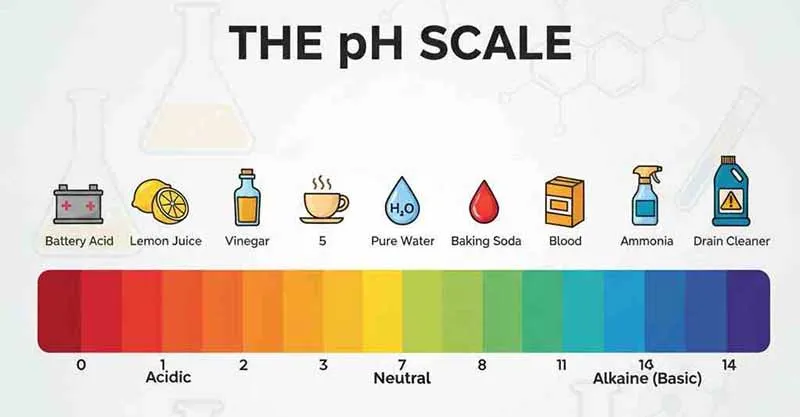
Deionized water systems can accommodate a variety of applications. When selecting an appropriate system, users should prioritize the purity of the produced deionized water—commonly measured by resistivity—along with the hourly water output and the costs associated with resin regeneration or replacement. Additionally, it is advisable to monitor parameters such as the pH of the final deionized water to ensure the system consistently and economically produces water that meets specific quality standards.
What Is The Formula For Deionized Water?
Strictly speaking, deionised water does not have a traditional chemical formula, as it is intended to be pure H₂O. The term "deionised water" refers to water that has undergone processes to remove impurities, rather than a specific chemical compound. The main technical methods for producing deionised water include:
Ion exchange: This is the most established method. When the resin becomes saturated, it can be regenerated with acid or alkali solutions to restore its function and allow for reuse.
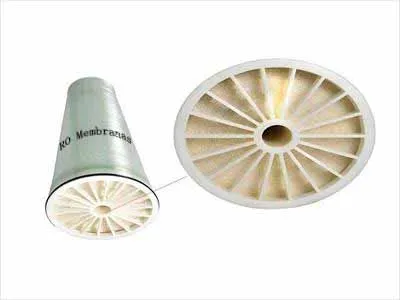
Reverse osmosis (RO): This method uses high pressure to force water through a semi-permeable membrane with extremely small pores, retaining most ions, organic matter, and microorganisms. Although energy-intensive, it is highly efficient and is often used as a core or pre-treatment step.
Electro-deionisation (EDI): This advanced technology combines electrodialysis and ion exchange. Under the influence of a direct current electric field, it enables directional migration and deep removal of ions, allowing for continuous production of high-purity water without chemical regeneration. This makes it both environmentally friendly and highly efficient.
Therefore, the essence of deionised water "formulation" is: raw water plus a series of advanced desalination and purification technologies. Its purity results from multiple filtration stages in a deionised water system, rather than from proportional mixing.
Where Can I Purchase Deionized Water?
Firstly, online e-commerce platforms are currently the most convenient channels for purchasing deionized water. Simply search for keywords such as "deionized water" or "laboratory pure water" on major e-commerce sites to find products available in various sizes, ranging from 500 ml bottles to 20 L containers. Before placing an order, carefully review the product description to verify its purity level (e.g., laboratory grade, industrial grade) and key specifications (e.g., resistivity) to ensure the deionized water meets your specific requirements.
Offline physical stores are also reliable sources of deionized water. Professional chemical reagent suppliers or scientific instrument companies often serve as primary providers for laboratory users, offering deionized water in various sizes accompanied by purity certificates. Additionally, large hardware and building materials markets or chemical supply stores may sell industrial-grade bottled deionized water. It is worth noting that some high-end car detailing shops or gas stations occasionally stock deionized water specifically for vehicle battery top-ups or for mixing windshield washer fluid.
In summary, deionized water is a highly purified product produced through advanced technology. By understanding its principles and preparation methods, you can make a more informed decision based on your specific needs—whether to buy a ready-made product or to build your own system to obtain this essential "industrial lifeblood and "experimental foundation." Regardless of the purchase method or equipment selected, clearly defining your purity requirements for deionized water is essential to making the best choice.
If you have any further questions about marine bilge pumps, please feel free to contact us.