- 2026-03-05
Process Of Water Cycle In Order: 7 Clear Steps Explained
What Is A Water Cycle?
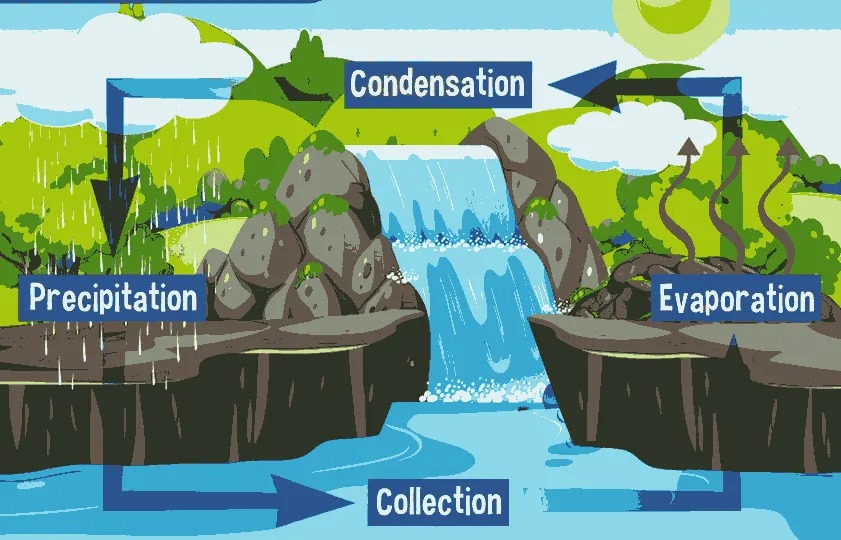
The water cycle, also known as the hydrological cycle, is the perpetual and dynamic process that describes the movement of water on, above, and below Earth's surface. This essential cycle involves the continuous circulation of water molecules through various states:liquid, vapor, and ice.
Powered by solar energy and gravity, the water cycle ensures the redistribution and renewal of our planet's finite freshwater supply. Understanding the water cycle is crucial for comprehending weather patterns, climate systems, and the availability of vital water resources for all ecosystems.Below are the 7 steps of the water cycle to help you understand them.
The 7 Steps In The Water Cycle
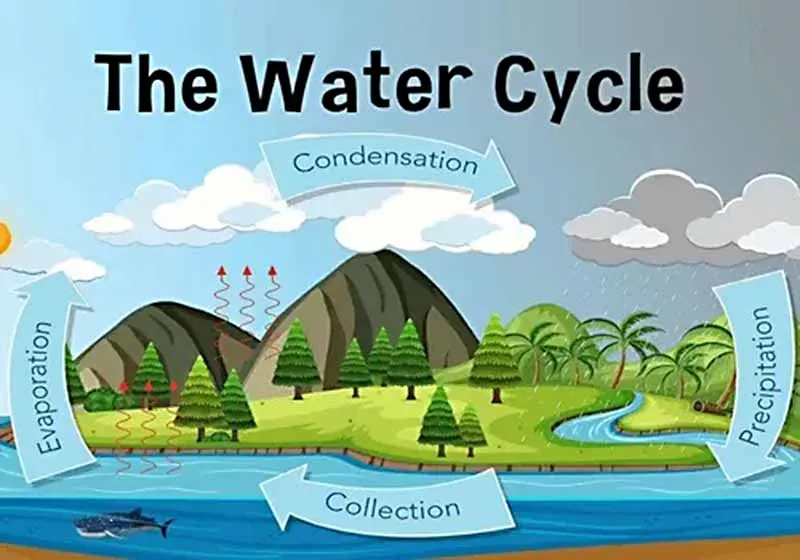
The global industrial water cycle can be described through a series of seven interconnected stages or processes.
Step 1:Evaporation
The water cycle begins with evaporation, where solar energy heats surface water from oceans, lakes, and rivers, converting it into water vapour. This process is the main pathway for water to enter the atmosphere.
Step 2: Transpiration
Transpiration usually occurs alongside evaporation and together they are referred to as evapotranspiration. In this process, plant roots absorb water and release it as water vapour through their leaves. It is a significant source of atmospheric moisture.
Step 3: Condensation:
Condensation occurs when water vapour rises and cools in the atmosphere. The vapour recondenses into tiny liquid water droplets, forming clouds. This step is essential for the next stage of the water cycle.
Step 4: Precipitation
When cloud droplets accumulate and become too heavy to remain suspended, water returns to the Earth's surface as precipitation. Precipitation can be rain, snow, sleet, or hail, returning freshwater to land and ocean.
Step 5: Infiltration
After precipitation reaches the ground, some water seeps into the soil through infiltration. This replenishes groundwater reserves, which are important reservoirs in the water cycle.
Step 6: Runoff
Water that does not infiltrate the soil becomes surface runoff. It flows across the surface and eventually joins streams, rivers, and oceans, continuing the water cycle.
Step 7: Collection
The final stage refers to the accumulation of water in reservoirs such as oceans, lakes, glaciers, and aquifers. Water remains here temporarily until it evaporates, at which point the water cycle begins again, demonstrating its cyclical nature.
Why The Order Of The Water Cycle Matters?
The order of the industrial water cycle is crucial because each stage relies on the previous one. Evaporation must occur first to convert liquid water into vapour; only then can condensation form clouds, followed by precipitation that returns water to Earth. If this sequence is disrupted, the entire system fails: water cannot be redistributed properly, resulting in droughts, floods, or unbalanced ecosystems.
In teaching, learning, and examinations, emphasising the correct order helps students understand cause and effect. Memorising the steps without context leads to confusion, while mastering the sequence develops logical thinking. Examinations focus on order to assess whether students truly understand how the water cycle functions as a connected process, rather than as isolated facts.
Frequently Asked Questions About the Water Cycle
What is the correct order of the water cycle?
Evaporation → Transpiration → Condensation → Precipitation → Infiltration → Runoff → Collection.
Which process occurs first in the water cycle?
Evaporation is always the first step in the water cycle.
Is transpiration always included in the water cycle?
Some simplified models omit transpiration, but it is an important part of the complete water cycle.
What Is Transpiration In The Water Cycle?
Transpiration is a specific and crucial component of the water cycle. It is the biological process by which moisture is carried from plant roots to small pores on the underside of leaves, where it changes to vapor and is released into the atmosphere. Transpiration acts as a natural "sweating" mechanism for plants, regulating their temperature and nutrient uptake. Within the broader water cycle, transpiration is a major source of atmospheric water vapor, often contributing more than from evaporation from soil in many regions. Therefore, forests and vast vegetation play an an indispensable role in driving and regulating the water cycle through transpiration.
What Is The Relationship Between Water Circulation And Filtration?
The water cycle is intrinsically linked to Nature's filtration system. As water circulates through the various stages of the water cycle, it undergoes natural purification. During infiltration, water percolating through soil and rock layers is physically filtered as particles are trapped. Furthermore, chemical and biological interactions in the soil and within aquifers help break down contaminants. This filtration process within the water cycle recharges groundwater with relatively clean water. Similarly, evaporation and transpiration effectively distill water, leaving impurities behind to produce pure water vapor.
Thus, the movement and circulation inherent in the water cycle is fundamental to Earth's ability to clean and replenish its water. Protecting the natural pathways of the water cycle, such as forests that aid infiltration and transpiration, is synonymous with protecting our water filtration infrastructure. The continuous circulation of the water cycle ensures that the vital process of natural filtration occurs perpetually, maintaining the quality and sustainability of our water resources.
If you have any further questions, please feel free to contact us.
You might also like: