- 2025-12-16
How To Choose A Reverse Osmosis System?
Whether you are seeking a reliable reverse osmosis (RO) water purifier for your home or selecting a dependable RO water treatment system for your factory, RO technology is essential for ensuring high-quality water. However, with numerous RO brands, models, and technical specifications available, how can you avoid making the wrong choice and find the most suitable RO system? This article provides a detailed RO selection guide, from needs assessment to solution development.
Learn More:How Does Reverse Osmosis Work?
How to Choose a Reverse Osmosis System?
Step 1: Needs
Choosing an RO system should not be based solely on the product itself, but rather on an analysis of your own requirements. Please conduct a self-assessment using the following four dimensions:
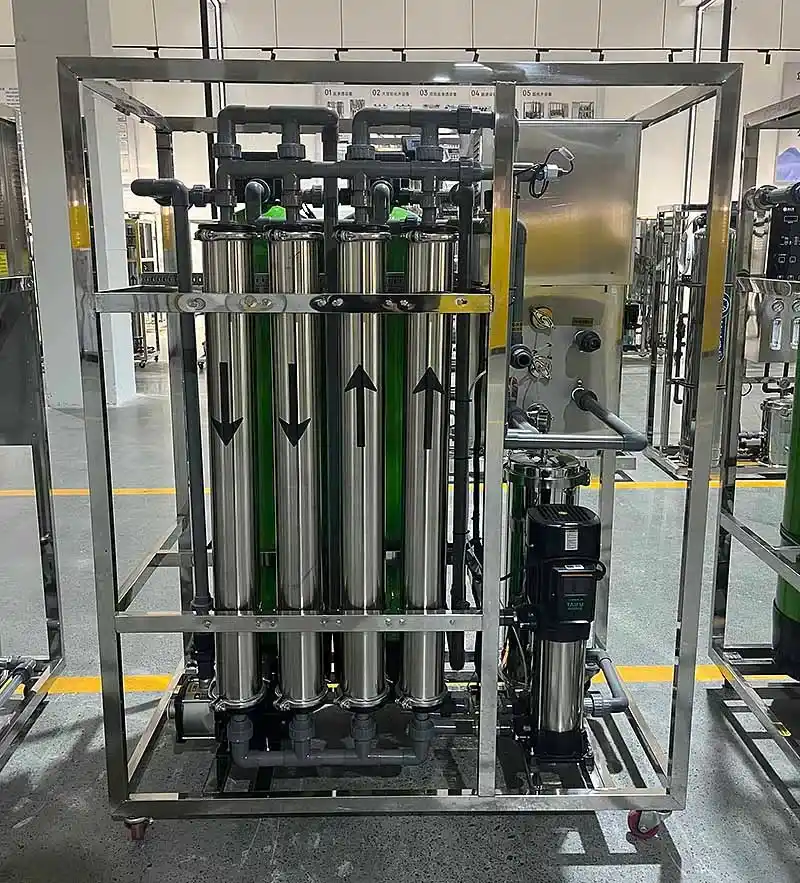
1.Core Scenario Positioning: Clearly define the purpose of purchasing the RO system.
Home Drinking: The primary need is to ensure the absolute safety of drinking water, which is the main requirement for a home drinking water filtration system, while also considering taste and ease of use.
Industrial Production: Needs vary. For example, the semiconductor and pharmaceutical industries require absolutely pure ultrapure water; the food and beverage industry must meet hygiene standards and ensure product flavour; and scenarios such as zero wastewater discharge and seawater desalination require high salt tolerance and recovery rates.
2.Source Water Quality Assessment: This is the foundation for selecting a reverse osmosis (RO) system. Total Dissolved Solids (TDS)is the core indicator. Different types of raw water require different pretreatment methods and membrane element selection for RO:
Municipal tap water (TDS typically <500 mg/L)
Brackish water (TDS typically <5000 mg/L)
Seawater (TDS approximately 35,000 mg/L)
Tertiary wastewater (high organic content)
Recommendation: Household users can purchase a TDS meter online for initial testing. If the value is >300 mg/L, an RO system is generally recommended. For industrial users or complex situations, it is essential to commission a service provider to conduct a professional, comprehensive water quality analysis.
3.Water consumption calculation: This determines the treatment capacity of the RO system.
Household flux (G): Refers to the system's 24-hour water production capacity (1 G ≈ 3.785 litres). Common values such as 600 G and 1000 G refer to daily water production. The higher the flux, the faster the instantaneous water flow rate. Generally, 600–800 G is sufficient for a family of 3–4, while 1000 G and above are suitable for larger families.
Industrial water production capacity (m³/h): This is the core of designing a reverse osmosis (RO) water purifier. According to Wharton Technology's guidelines, for a production capacity less than 0.2 m³/h, a small or household RO membrane can be selected; for less than 3 m³/h, a 4-inch membrane can be selected; and for greater than 3 m³/h, an 8-inch membrane is required.
4.Long-term cost considerations: Purchasing RO equipment is just the beginning; The total lifecycle cost must be calculated.
Initial investment: Equipment purchase cost.
Operating energy consumption: Electricity consumption for water pumps and other components.
Consumable costs: The cost of regularly replacing reverse osmosis filter cartridges, especially RO membranes. Selecting a model with a long RO membrane lifespan can significantly reduce the average annual cost.
Water efficiency (wastewater ratio): The amount of wastewater generated during pure water production. The new national standard divides water efficiency into three levels, with level one being the most water-efficient. A balance must be struck between water conservation and protecting membrane lifespan (preventing scaling). A wastewater ratio of 3:1 or 4:1 is common and highly efficient.
Step Two: Reverse Osmosis System Selection – Matching Core Technologies and Parameters
After clarifying your requirements, you can follow the process shown in the diagram below to select the technology and parameters that best suit your system:
Product | RO reverse osmosis water purifier | Ultrafiltration water purifier |
Core Principles | Using a high-pressure pump, water is forced through an RO membrane with a pore size of only 0.0001 micrometers to remove all dissolved impurities. | Physical sieving is performed using tap water pressure and an ultrafiltration membrane with a pore size of 0.01-0.1 micrometers. |
Filtration capacity | All-in-one: Effectively removes heavy metals, viruses, bacteria, limescale (calcium and magnesium ions), antibiotics, etc. | Basic type: Removes bacteria, colloids, rust, and sediment, but cannot remove heavy metals, viruses, or dissolved salts (scale). |
Output water quality | Pure water with very low TDS (≤10ppm) and virtually no limescale. | Mineral water: Retains minerals such as calcium, magnesium, and potassium in the water, with minimal change in TDS and a taste close to tap water. |
Applicable scenarios | Water safety is paramount: Suitable for areas with high TDS, heavy limescale, aging pipes, and for families with sensitive populations such as mothers, infants, and the elderly. | For areas with good water quality: Suitable for areas with soft municipal tap water and low contaminant levels, or for users who want to retain minerals and have a limited budget. |
Other features | Requires electricity, generates wastewater (water efficiency rating needs attention), and has higher filter costs (especially RO membranes). | Typically requires no electricity, produces no wastewater, is relatively simple to install and maintain, and has low initial purchase cost for the machine and filter cartridges. |
Usually does not require electricity, produces no wastewater, is relatively easy to install and maintain, and has lower initial purchase and filter costs.
Reverse Osmosis Selection: RO vs Ultrafiltration
For household users, choosing between RO reverse osmosis and ultrafiltration is often necessary. Here are the core differences between the two technologies:
Product Comparison | RO (Reverse Osmosis) technology | Ultrafiltration Technology |
Core Principle | Uses a high-pressure pump to force water to flow backward through a membrane with 0.0001 micrometer pores. | Relies on the pressure of tap water to pass through a membrane with pores of 0.01-0.1 microns. |
Filtration Accuracy | Extremely high efficiency, effectively removing heavy metals, viruses, bacteria, dissolved salts, etc. | Moderately effective, removing bacteria, colloids, rust, sediment, etc., but unable to remove heavy metals and dissolved salts. |
Effluent Water Quality | Near-pure water, TDS value typically ≤10ppm, safe for direct drinking, and produces no limescale when boiled. | Retains natural minerals in the water; TDS value is close to that of the raw water, and the taste is closer to "natural water." |
Energy Consumption | Requires electricity to drive the high-pressure pump. | No electricity required, relies on tap water pressure. |
Wastewater Generation | Wastewater is discharged, with a wastewater ratio typically between 1:1 and 1:3. | No wastewater produced. |
Applicable Scenarios | Suitable for areas with poor water quality, families with infants or elderly members, and scenarios requiring high water quality. | Suitable for areas with good water quality, those who value mineral retention, those with limited budgets, or those staying for short periods. |
According to the Centers for Disease Control and Prevention, although reverse osmosis technology filters out minerals from the water, the minerals needed by the human body mainly come from food, and the mineral content in water is less than 1%.
Reverse Osmosis System Price: The price of large-scale reverse osmosis equipment varies considerably. Below is a general price range for equipment with different water production capacities:
- 1 ton/hour water production capacity: Single-stage reverse osmosis equipment costs 15,000-30,000 yuan; double-stage reverse osmosis equipment costs 25,000-50,000 yuan.
- 10 tons/hour water production capacity: Prices are typically around 70,000-150,000 yuan. For example, a 10-ton large-scale reverse osmosis (RO) system sold directly by a Tianjin manufacturer is priced at 7,800 yuan per set. However, it should be noted that its configuration and related parameters may differ from those of other brands.
- 100 tons/hour water production capacity equipment: Generally, prices range from several million yuan, with the specific price significantly influenced by factors such as brand, materials, and level of automation. For instance, a basic 100-ton system might cost between 1 million and 2 million yuan , while imported brands or systems with higher configurations, using more advanced technology and superior materials, could exceed 3 million yuan.
- 200 tons/hour water production capacity equipment: Market prices typically range from 2 million to 3 million yuan.
Household/Commercial: The Choice Between RO and Ultrafiltration For home and office settings, RO and ultrafiltration are the two mainstream technologies. Their fundamental difference lies in filtration precision, which directly determines the quality of the output water and its applicability. The following is a comparison of their core differences: Concerns about "mineral deficiency in pure water": Mainstream health views both domestically and internationally suggest that the body's mineral needs are primarily met by food, with drinking water providing a negligible percentage. Therefore, drinking pure water will not lead to mineral deficiency.
Industrial Users: Refined Membrane Technology Matching
The selection of industrial reverse osmosis systems is more complex, requiring strict adherence to water quality, quantity, and product water standards in engineering design. In addition to following the steps in the flowchart above, the following points should be emphasized:
Reverse Osmosis Dedicated Membrane Selection: For specific industries, dedicated membrane elements should be selected to ensure effectiveness and stability. For example, the semiconductor industry requires ultrapure water series; the food and beverage industry requires dedicated series that meet hygiene standards; and the pharmaceutical industry, which requires high-temperature sterilization, can choose heat-sterilized membrane elements. System Design and Service: Industrial reverse osmosis is a systems engineering project, and the pretreatment stage is crucial. Choosing a supplier that can provide full-process services from water quality testing, solution design, installation and commissioning to operation and maintenance support is a key guarantee for project success and long-term stable operation.
Step 3: Product and Reverse Osmosis Manufacturing Supplier Selection
After clarifying the technology roadmap, selection can be made from the following two aspects:
1. Brand and Product Market Overview
Residential Market: The market structure is clear. Each brand has its own focus in technology, service, and reputation. Choose carefully.
Industrial Market: There are various types of suppliers. Selection should be based on the project scale and complexity.
Comprehensive Environmental Protection Groups: Such as Beijing Enterprises Water Group and Fupeng Environmental Protection, specializing in large-scale municipal and industrial park-level wastewater reuse and zero-discharge projects, possessing integrated investment, construction, and operation capabilities.
Specialized Technology Companies: Possessing in-depth technology and rich project experience in specific fields (such as data center cooling water, electronic ultrapure water, and food and beverage water).
Equipment and Solution Suppliers: Such as Fupeng Technology (membrane element manufacturer) and the water treatment systems mentioned in the webpage information. They can provide services from core membrane elements to complete equipment sets, especially suitable for standardized small and medium-sized projects or membrane element replacement.
2. Four Dimensions for Evaluating Reverse Osmosis System Manufacturers
Whether purchasing for residential or industrial use, it is recommended to evaluate suppliers from the following four dimensions:
Qualifications and Compliance:
Check whether they possess the necessary national certifications (such as water-related permits), reverse osmosis patents, and ISO management system certification.
Technological Adaptability:
Can they provide solutions tailored to your water quality and purification needs, rather than simply pushing standard products?
Service Completeness:
Do they have localized service capabilities? Is their response timely? Can they provide continuous technical support and consumable supply?
Reputation and Case Studies:
Examine their history in the industry, successful cases, and existing customer reviews.
Common Faults and Maintenance of Reverse Osmosis Systems
The main faults of reverse osmosis systems are reduced permeate flow, increased salt permeate rate, and increased pressure drop. These problems are usually caused by membrane fouling and require chemical cleaning and pretreatment optimization to resolve.
Special Maintenance Required for Water Purification Systems Not in Use for Long Periods:
When the reverse osmosis system is not in use, add a protective solution to inhibit microbial growth. If the water temperature is below 25℃, the protective solution should be replaced approximately every 30 days; at higher water temperatures, it should be replaced every 15 days.
Membrane fouling is a serious concern, manifesting as decreased permeate flow or reduced desalination rate. Pretreatment is crucial for preventing membrane fouling, reducing impurities through multi-stage filtration, and extending membrane life. When cleaning, be aware of the limitations of the membrane material on chemicals; for example, composite membranes cannot be cleaned with disinfectants containing free chlorine.
If you have any further questions, please feel free to contact us.
You might also like:
A Comprehensive Guide to Reverse Osmosis (RO) Water Purification
Top 10 Industrial RO Systems Manufacturers In The World 2025