- 2026-03-14
What Is A Bilge Pump? How Does It Work On a Boat ?
What Is a Bilge Pump On a Boat?
-20° suitability ensures operation in low-temperature environments, such as pumping cold seawater or low-temperature oil.
Learn more: Guide for selection of marine water pumps
How Does It Work On a Boat?
The operating principle of a bilge pump depends on its specific type, though its fundamental purpose remains the same: to discharge accumulated water from the bilge. Today, the most common type of automatic bilge pump is equipped with a float switch; this marine-grade float switch functions as a water-level sensor, eliminating the need for manual monitoring.
When the water in the bilge rises to a preset maximum level, the float switch automatically activates the pump to begin draining. Once the water level recedes to a safe minimum, the float switch automatically shuts off the pump – a mechanism that conserves power and eliminates the need for frequent manual intervention. In contrast, manual bilge pumps require crew members to operate them; these pumps are typically installed on small vessels or used as backup units within an automatic bilge pump system.
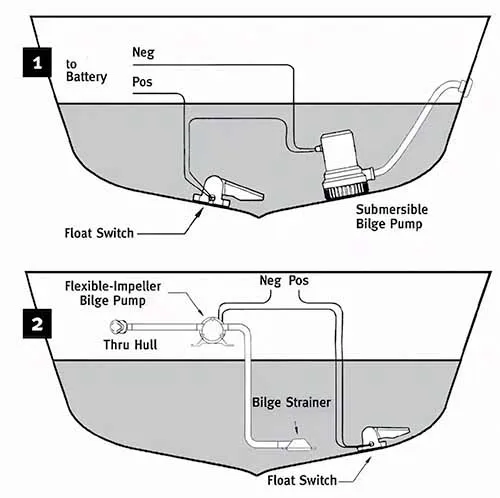
Where Is the Bilge Pump Iocated On a Boat?Common Types
Bilge pumps are generally installed in different locations based on their type. Centrifugal bilge pumps are submersible and canThe location of the bilge pump depends heavily on its type and operating principle.
Submersible Bilge Pumps (like centrifugal models) are designed to operate underwater and are therefore installed directly on the bilge floor.
Diaphragm Bilge Pumps are non-submersible and must be placed above the water surface, typically mounted on a wall or bracket above the bilge floor. Their intake hose, however, is dropped into the bilge water. This design often gives them strong self-priming capabilities and the ability to move water upward very effectively.
Here are the two most common types of bilge pumps:
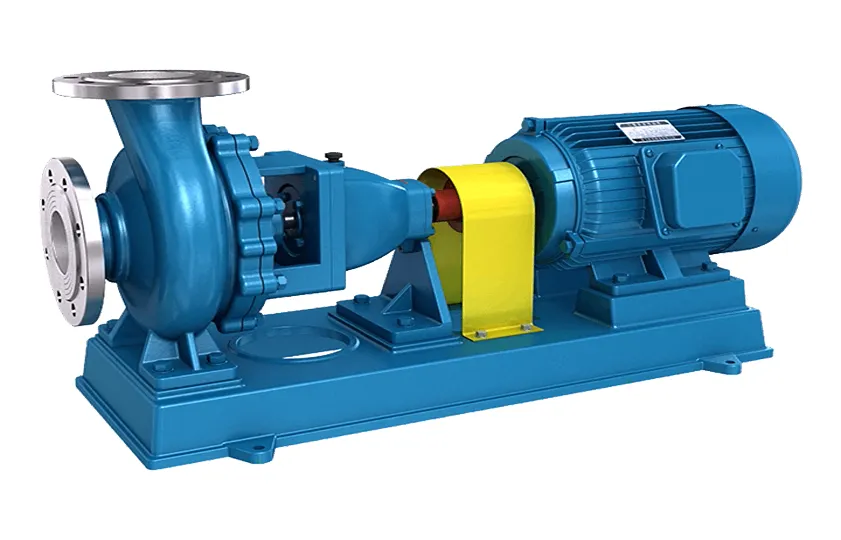
These are the most widely used electric bilge pumps. They are electrically driven and use a rotating impeller to create centrifugal force, which draws fluid in and then pushes it out through the discharge port. They are known for being acid-resistant, alkali-resistant, and corrosion-resistant, making them suitable for various marine applications..
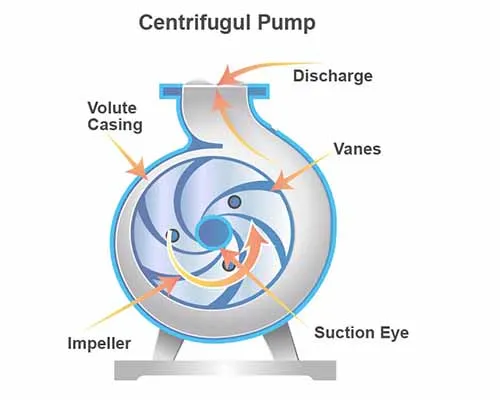
1. Centrifugal Blige Pumps
Advantages of Centrifugal Blige Pumps:
.Suitable for mildly corrosive liquids
.Easy maintenance
.High flow rate
.High head (pressure)
.Wide range of applications
.Disadvantages of Centrifugal Pumps:
.Can be prone to clogging with debris
.May lose prime if not submerged (for standard models)
.Less effective with highly viscous fluids
.Wide range of applications
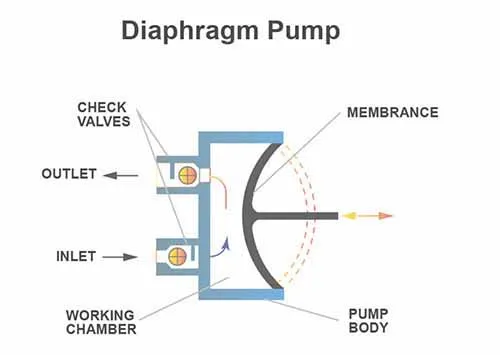
2.Electric Diaphragm Bilge Pumps
These are self-priming positive displacement pumps. An electric motor drives one or two diaphragms back and forth, creating a pumping action that draws water in and pushes it out. A key advantage is their superior ability to move water upward and handle air in the line better than many centrifugal pumps, allowing them to drain water at a high flow rate even from a dry start. Diaphragm bilge pumps often have a longer service life than many centrifugal pumps due to their robust design. They come in various types, including single and double diaphragm models, to suit different environmental needs.
Essential Bilge Pump Maintenance
Regular bilge pump maintenance is non-negotiable for vessel safety. A failure can lead to flooding, so a proactive approach is essential.
Regular Inspections
To ensure the proper operation of the pump and its associated components, regular inspections should be performed.
Key areas to check include:
Electrical Connections: Look for corrosion or loose wires.
Float Switch: Ensure it moves freely and isn't obstructed by debris.
Intake and Outlet Ports: Check for leaks, blockages, or signs of damage.
General Operation: Listen for any abnormal noise or vibration during operation.
Timely Part Replacement and Cleaning
Components like bearings, seals, and the diaphragm (in diaphragm pumps) are susceptible to wear. Replace them immediately if you notice performance deterioration or physical damage. Regularly clean the pump intake screen and the surrounding bilge area of debris. Timely cleaning and lubrication of key components will prolong the pump's lifespan and ensure efficient operation.
How Long Do Bilge Pumps Last?(Service Life)
For questions about the "service life of bilge pumps" or "how long marine bilge pumps last," their actual lifespan depends on three key factors:
.Quality of the Pump: Choosing a high-quality, reputable brand from the start.
.Operating Environment: How often it's used and the cleanliness of the bilge water.
.Maintenance Schedule: Adherence to a regular inspection and cleaning routine.
It is crucial for users to select the appropriate pump model and follow a consistent maintenance plan based on their specific conditions to ensure the long-term, stable operation of the pump.
Does a bilge pump need a filter?
Yes, a bilge pump filter or strainer is highly recommended. It is installed at the pump's intake to intercept impurities, debris, and particulate matter in the bilge water. This is vital for preventing clogs in the pump itself or the pipes, which can cause malfunctions, increased wear, or complete failure. Without a filter, debris can enter the pump, damaging the impeller or diaphragm and potentially leading to dangerous situations at sea. Therefore, always ensure the pump and its intake are clear before setting out.
Common Bilge Pump Problems & Troubleshooting
Below are the most common issues and their corresponding solutions:
.Pump fails to start: Check the power supply and wiring for signs of corrosion or loose connections. Ensure the float switch is functioning correctly and is free of obstructions.
.Pump runs but fails to pump water: Check the intake system for air leaks or a clogged strainer. For non-submersible models, ensure the pump is properly primed and vented.
.Pump body leaks: Check for aged or worn seals or damaged gaskets. Replace any components that show signs of wear immediately.
.Abnormal noise: Check the impeller or diaphragm area for lodged foreign objects. Lubricate components as needed.
How to Choose the Right Bilge Pump for Your Boat
When selecting a marine bilge pump, consider these three key factors (especially relevant for search terms such as "how to choose a bilge pump" or "best bilge pump for small boats"):
.Flow Rate (GPH): Choose a pump with a flow rate suitable for your boat’s size. Larger hulls require higher flow rates, measured in gallons per hour.
.Voltage: Most boats use 12V bilge pumps, while larger vessels typically require a 24V system.
.Type: For most vessels, an automatic bilge pump is the best choice. A manual bilge pump is a good option for smaller boats or as a backup unit.
Automatic vs Manual Bilge Pumps
Feature | Automatic Bilge Pump | Manual Bilge Pump |
|---|---|---|
Activation | Float switch (automatic, no manual intervention) | Manual operation (crew intervention required) |
Best For | Most modern boats, full-time use | Small boats, backup for automatic pumps |
Power Requirement | Electric (12V/24V) | Manual (no power needed) |
Maintenance | Regular float switch and electrical checks | Minimal (check for clogs) |
If you have any further questions about boat maintenance or selecting the right marine bilge pump for your vessel, please feel free to contact us.
Ready to get started? Get a free quote for your bilge pump or browse our bilge pump models.
You might also like: